
Americans who can’t find or can’t afford stem cell treatment at home are increasingly crossing into Mexico for it, and Tijuana is one of the main destinations. A Moneywise report republished by Yahoo Finance on June 5, 2026 follows one patient’s $7,000 treatment in Tijuana and sets her results against the costs, regulations and scientific questions that come with “stem cell tourism.”
One patient’s 12 weeks in Tijuana
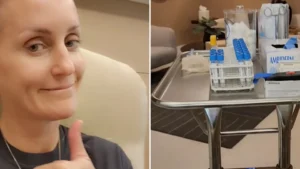
The report centers on Alisha, a hairdresser who posts on TikTok as @hippiegirl.modernworld. She documented a 12-week course of treatment and recovery in Tijuana for injuries to her neck and rotator cuff. She paid $7,000 for stem cell injections in both areas and combined them with red light therapy and peptides. The report does not name the clinic.
In a six-week update, she said she had regained full mobility and no longer felt the deep, constant ache she had before. She expects to need a booster later, because her job keeps putting strain on the same muscles.
Her account is a personal testimonial. It is not a clinical result, and it cannot show how much of her improvement came from the stem cells rather than the other therapies, rest or time.
What patients are seeking
According to the report, most stem cell travelers want relief from injury and joint pain. Cosmetic and “rejuvenation” use is a growing second market. The report cites a Financial Times account of a wealthy client in her 60s who turned down a Maldives clinic because it offered only bone marrow–derived cells and she wanted umbilical cord–derived cells.
Cells used in these treatments are usually taken from the patient’s own fat, bone marrow or blood, or come from donated tissue such as umbilical cord. Many cosmetic and orthopedic treatments use mesenchymal stem cells (MSCs).
Price comparison: Mexico vs. the U.S. and Thailand
The report compiled these cost estimates for a single treatment:
| Location | Estimated cost per treatment | Source cited |
|---|---|---|
| United States | $10,000–$60,000 | PubMed Central |
| Bangkok, Thailand | $4,800–$14,500 | Bookimed |
| Mexico | $1,600–$9,500 | Bookimed |
Prices are estimates and vary widely by clinic, cell source, number of injections and condition treated. Travel, lodging and time off work are extra.
The report lists the United States, China, India, Mexico and Thailand as the main stem cell tourism destinations. For U.S. patients, Tijuana’s location just south of San Diego keeps travel costs low compared with flying to Asia.
Regulation and evidence: what to know
In the United States, the FDA regulates most stem cell products as drugs or biologics that need clinical trials before approval. The only FDA-approved stem cell products are made from cord blood and are used to rebuild the blood and immune system, mainly in patients with blood cancers and certain other blood disorders. Bone marrow transplants for these conditions are established care. The FDA has warned consumers about clinics that market unapproved stem cell treatments for orthopedic, neurological, cosmetic and other conditions.
The report notes that there is still little high-quality evidence that most of the treatments sold to travelers work, and that MSCs are allowed outside clinical trials in only a few countries. It also points out that cells given by IV travel throughout the body, so they cannot be steered toward a specific cosmetic goal. Dr. Anita Rajoo, a UAE-based regenerative medicine physician, told the Financial Times that cells used for beauty purposes can’t be programmed to work that way. The report adds that combining MSCs with treatments such as Botox may cause adverse effects.
In Mexico, clinics that offer cell therapies need health authorization from COFEPRIS, the federal health regulator. Patients can ask a clinic to show its COFEPRIS license before booking.
Checklist before booking stem cell treatment in Tijuana
- Ask for the COFEPRIS license. Confirm the clinic is authorized for cell therapy, not just general medical services.
- Know the cell source. Ask whether the cells come from your own fat, bone marrow or blood, or from donated umbilical cord tissue, and how they are processed and tested.
- Check the physician. Verify the doctor’s medical license and specialty certification (for example, orthopedics or sports medicine for joint injuries).
- Ask for evidence. Request outcome data for your specific condition, and be wary of promises of a cure.
- Get an itemized quote. Find out what is included, such as imaging, the number of injections, boosters and follow-up visits.
- Plan aftercare at home. Tell your U.S. doctor beforehand and know who will treat you if a complication appears after you return.
What it means for Tijuana’s regenerative medicine sector
National coverage of patients like Alisha shows strong U.S. demand for regenerative treatment in Tijuana, driven by prices that can be a fraction of U.S. costs. It also raises the questions every clinic in the sector will face: which cells are used, what the evidence shows, and whether the clinic is properly licensed. Clinics that answer those questions openly are the ones best placed to earn patients’ trust. Tijuana Medical News will keep following regenerative medicine and stem cell developments in Baja California.
Resumen en español
Un reportaje de Moneywise, publicado en Yahoo Finance el 5 de junio de 2026, describe el auge del “turismo de células madre” de estadounidenses hacia México. La nota sigue a Alisha, una estilista y creadora de contenido en TikTok que pagó 7,000 dólares por inyecciones de células madre en el cuello y el manguito rotador en Tijuana, combinadas con terapia de luz roja y péptidos. A las seis semanas dijo haber recuperado la movilidad completa, aunque su caso es un testimonio personal y no un resultado clínico. Según el reportaje, un tratamiento cuesta entre 10,000 y 60,000 dólares en Estados Unidos, frente a 1,600 a 9,500 dólares en México. En Estados Unidos, la FDA solo ha aprobado productos de células madre de sangre de cordón umbilical para trastornos de la sangre, y advierte sobre clínicas que ofrecen tratamientos no aprobados. Antes de reservar, se recomienda verificar la licencia de COFEPRIS de la clínica, preguntar por el origen de las células, revisar las credenciales del médico y planear la atención de seguimiento al regresar a casa.
This article is for general information and is not medical advice. Consult a qualified physician before any stem cell or regenerative treatment.