

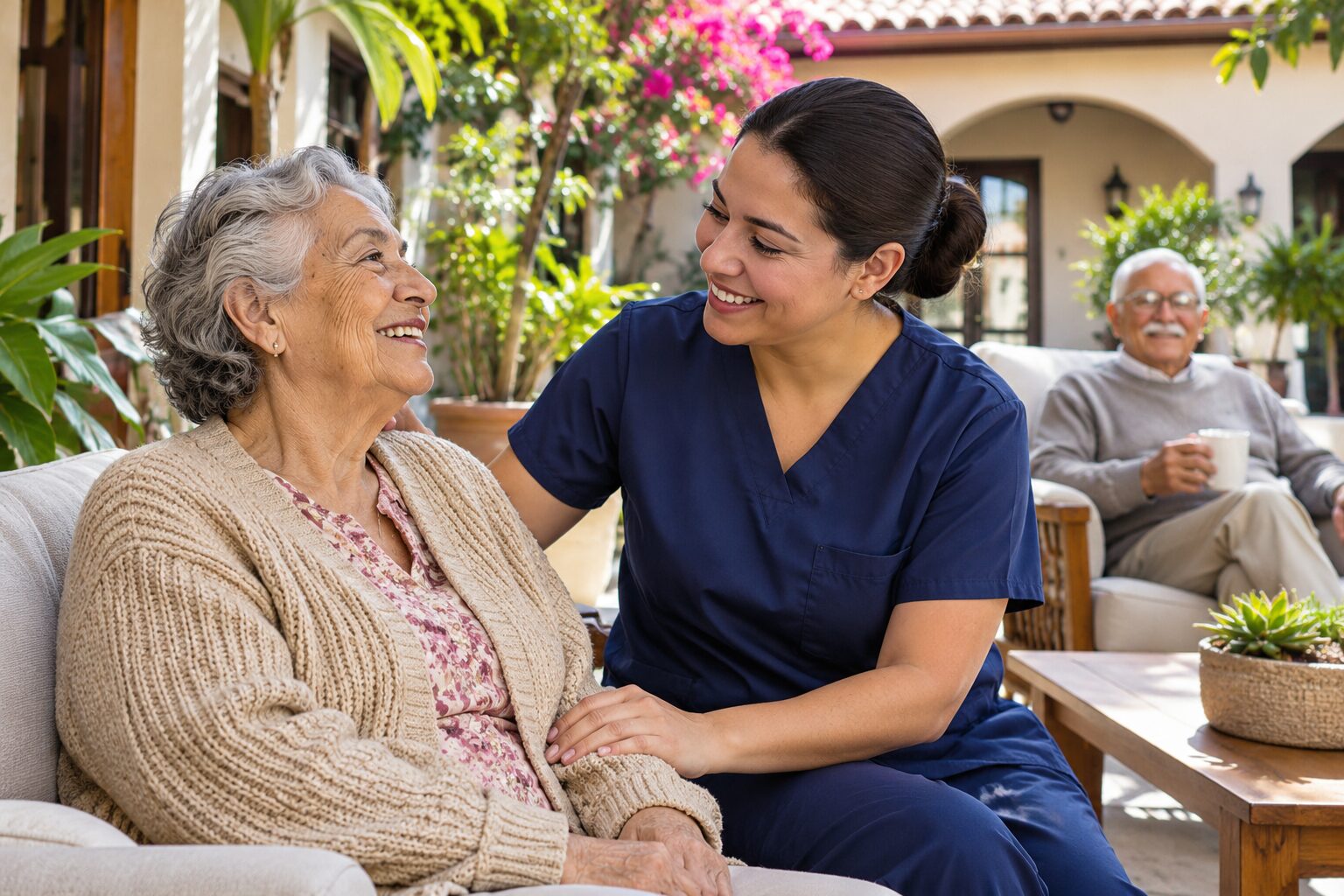
TIJUANA, Baja California — The demand for affordable senior adult care is creating new opportunities in Tijuana, Mexico, where residential assisted living, personal care services, and short-term senior accommodations offer potential alternatives to increasingly expensive care in the United States.
A caregiver assists a resident at a residential senior care home. Tijuana is drawing attention as a lower-cost option for assisted living and respite care.
Located directly across the border from San Diego, Tijuana has long attracted international patients seeking medical and dental services. Today, its proximity to Southern California, established healthcare sector, and comparatively lower operating costs are also drawing attention to senior living and eldercare services.
Although comprehensive statistics measuring the growth of Tijuana’s private senior care market remain limited, demographic trends, U.S. care costs, and locally advertised residential care options suggest an opportunity for continued development.
Rising Senior Care Costs in the United States
For millions of American families, caring for an aging parent or relative represents a significant financial commitment.
According to the 2025 CareScout Cost of Care Survey, released in March 2026, the national median cost of assisted living in the United States reached $6,200 per month, or $74,400 annually.
Private nursing home accommodations were substantially more expensive, with a national median annual cost of $129,575.
These expenses are forcing families to reconsider traditional long-term care arrangements, particularly when older adults require daily supervision, assistance with personal activities, or temporary residential support.
The Congressional Budget Office also projects that the U.S. population aged 65 and older will continue growing through 2036, increasing pressure on long-term care services.
For families in Southern California, senior care facilities across the border may represent another option worth evaluating.
Why Tijuana Is Attracting Attention
Tijuana offers several potential advantages for families considering senior care outside the United States.
- Affordability: Lower local operating expenses can allow residential providers to offer care at prices below those commonly found in the United States.
- Geographic proximity: Families living in San Diego and surrounding Southern California communities may be able to visit loved ones without extensive international travel.
- Bilingual services: Some local facilities advertise English- and Spanish-speaking personnel, helping residents communicate with caregivers and family members.
- Access to healthcare: Tijuana has an established network of hospitals, physicians, diagnostic centers, and rehabilitation providers. However, access and clinical coordination vary between residential facilities.
- Flexible accommodations: Depending on the provider, services may include temporary stays, respite care, assisted living, and ongoing residential assistance.
These advantages can be particularly relevant for older adults who do not require hospital-level treatment but need help with everyday living.
How Affordable Is Senior Care in Tijuana?
Published listings provide examples of the price difference.
A Tijuana senior care provider, Rizoma Care, advertises monthly rates of approximately 20,000 Mexican pesos for shared accommodations and 40,000 pesos for private accommodations.
Separately, a retirement residence listing for Hacienda los Años de Oro advertises starting rates of approximately $1,400 USD per month.
These prices are examples of advertised offerings, not a verified market-wide average. They may change according to the resident’s physical condition, room preference, supervision needs, medications, and additional services.
Furthermore, assisted living and skilled nursing are not interchangeable. Families should compare facilities based on the actual level of care provided, rather than price alone.
Baja California’s Aging Population Creates Local Demand
The opportunity for senior care in Tijuana is not limited to American residents. Baja California is experiencing its own demographic shift toward an older population.
According to the Baja California government’s population report using INEGI employment survey data, the percentage of residents aged 65 and older increased from 7.4% in early 2020 to 9% in early 2025.
This trend suggests growing local demand for services that support seniors, including residential assistance, rehabilitation coordination, adult day programs, and specialized personal care.
As families balance work responsibilities with the needs of aging relatives, professionally managed senior care facilities could become increasingly important throughout the region.
A Growing Opportunity for Temporary and Respite Care
One promising segment is short-term residential assistance.
Unlike permanent senior living arrangements, temporary care facilities may accommodate older adults recovering from an illness, transitioning home after hospitalization, or staying somewhere safe while family caregivers are unavailable.
Services can include:
- Assistance with bathing, dressing, and daily activities
- Meal preparation and nutritional support
- Mobility assistance and fall-prevention measures
- Medication reminders or administration by appropriately qualified personnel
- Social activities and companionship
- Coordination of appointments and medical visits
- Short-term accommodations for caregiver respite
Such facilities can help families manage temporary care needs without immediately committing to permanent assisted living.
However, older adults recovering from surgery or requiring skilled medical treatment should only enter facilities capable of meeting their clinical needs.
Quality, Safety, and Regulation Must Remain Priorities
Affordability should never come at the expense of resident safety.
Mexico maintains national standards governing social assistance services for vulnerable adults and older adults, including NOM-031-SSA3-2012, which addresses operational, organizational, and infrastructure requirements for covered facilities.
Families evaluating a residence should verify its applicable permits, staffing qualifications, emergency response procedures, medication policies, and ability to manage chronic conditions or mobility limitations.
Another important consideration is insurance. Traditional U.S. Medicare generally does not cover healthcare delivered in Mexico, except under limited circumstances. Families should establish how residential care, physician visits, emergency treatment, hospitalization, and medical transportation would be financed.
In-person facility inspections, clear written contracts, and direct conversations with caregivers are essential before making a placement decision.
The Future of Senior Adult Care in Tijuana
Tijuana is well positioned to explore a larger role in cross-border senior care, but developing a sustainable market will require more than competitive pricing.
Professional staffing, transparent care plans, effective clinical coordination, bilingual communication, and consistent quality standards will be necessary to earn the confidence of both Mexican and international families.
Potential growth areas include assisted residential living, respite care, adult day services, dementia support, and specialized senior accommodations.
For healthcare entrepreneurs and service providers, the opportunity is to create facilities that combine affordability with dignity, safety, and individualized attention.
For families, the opportunity is broader access to care options that may better fit their financial circumstances and loved ones’ daily needs.
As the population ages on both sides of the U.S.-Mexico border, Tijuana could become an increasingly important destination for affordable senior adult care. Its long-term success will depend on proving that lower costs can coexist with reliable, compassionate, and professionally managed services.
Sources and References
- CareScout / Genworth Financial (2026). 2025 Cost of Care Survey Results. Published March 2, 2026.
- Congressional Budget Office (2026). The Demographic Outlook: 2026 to 2056. U.S. population aging projections.
- Gobierno de Baja California / INEGI (2025). Día Mundial de la Población, Baja California. Population aging statistics for 2020–2025.
- Secretaría de Economía, Mexico. NOM-031-SSA3-2012. National standards for social assistance services to vulnerable adults and older adults.
- Medicare.gov. Travel Outside the U.S. Official Medicare coverage guidance.
- Local pricing references: Rizoma Care; Hacienda los Años de Oro.
Editorial note: Local facility prices are advertised examples and have not been independently confirmed. Available sources do not establish a verified Tijuana-wide market growth rate.
About Tijuana Medical News
Tijuana Medical News provides reporting and information on healthcare, medical services, patient care, wellness, and emerging healthcare industry trends in Tijuana and Baja California, Mexico.
By Medical News Team | Tijuana Medical News