



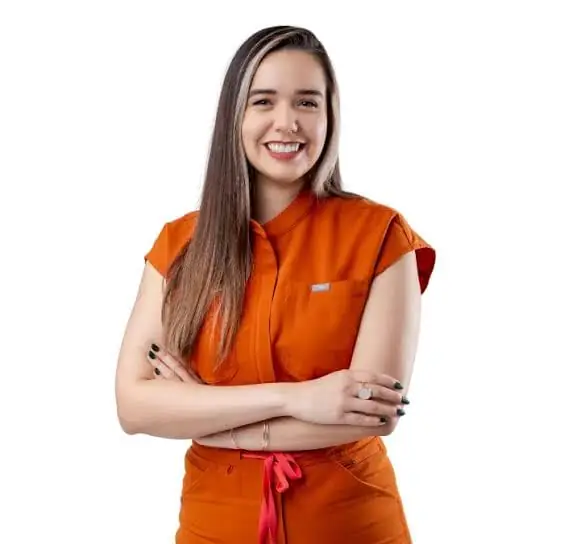
Lee este artículo en español: Dra. Maricel Vargas, de Origen Hair Clinic: por qué Tijuana es una alternativa seria a Turquía para el trasplante capilar
TIJUANA, Baja California — Between 70% and 75% of the patients treated at Origen Hair Clinic in Tijuana come from the United States, says Dr. Maricel Vargas, the clinic’s medical director, who believes the city offers U.S. patients a practical alternative to traveling overseas for hair restoration.
In an interview with Tijuana Medical News, Vargas talked about her path into trichology, the branch of medicine devoted to the hair and scalp, what draws American patients across the border, and how to tell proven hair-loss treatments apart from the promises circulating on social media.
From La Paz to Tijuana
Vargas is originally from La Paz, Baja California Sur. She left home young to study medicine and, like many students, expected to return once she finished. Instead, she has now lived in Tijuana for about 12 to 13 years. “Tijuana welcomed me and opened doors that I might not have had anywhere else,” she said.
She describes the city as a major hub for private medicine, both aesthetic and general, close to the border and to new technology. Origen Hair Clinic, she said, was started by a team that works well together and shares the same ethical goals: to offer patients the best possible care.
A surgeon’s path into hair
Surgery was always her focus. “Being able to take something and repair it, literally with your hands, is something I really enjoy,” she said. The long hours under bright lights in a windowless operating room, which some colleagues say they could never stand, are part of what she loves about the work.
After medical school, relatives who work in surgery drew her into plastic surgery for both women and men, and from there into trichology. The specialty has grown quickly in recent years, she said, as aesthetics has become part of everyday life. Ten or fifteen years ago, aesthetic treatments were mostly for people with more money and were seen as aspirational. Today they are within reach of far more people, which has brought more competition and more choice. In Tijuana, she noted, options for dermatology, plastic surgery and now trichology can be found on nearly every corner.
Why U.S. patients cross the border
Most of her U.S. patients come from Mexican families who emigrated to the United States or are U.S.-born Americans. What they look for in Mexico, she said, is warmth, good treatment and the chance to get more than one opinion. In the U.S., the protocols and paperwork required to see a specialist directly can be rigid and difficult. In Mexico, patients are free to compare several specialists and choose the one they feel most comfortable with, or the one that best fits their logistics.
Many patients make a full day of it. “They come to their hair appointment, then they go to the dentist and then to the dermatologist,” Vargas said. “They make the most of the day and go back to the United States feeling like new.”
Proximity to California is a major advantage, she said. The clinic offers transportation to and from the United States for patients who want it, and some of her patients cross back and forth three times in a single week.
Transparency from the first visit
Vargas describes herself as very transparent with patients. She said she often builds trust, and even friendship, by being honest from the start, whether the outlook is good or bad, and by staying with patients through the process. “Many times there are no immediate solutions, but there can be support, so that the patient leaves informed,” she said.
She chose the field, she said, because trichology has very high success rates. When she finishes a hair transplant and knows the patient’s history, she can usually tell how the result will look six months later. “Knowing it will go well for them, and that you can change a life, is a tremendous satisfaction,” she said.
The work is not only cosmetic. Some diseases damage the scalp, and hair loss can take an emotional toll, so the clinic also works on helping patients recover how they felt before and improve their quality of life. “That should be what drives doctors: being able to give a benefit and leave your mark on someone’s life,” she said.
Proven treatments versus social media promises
Vargas urged patients to distinguish between treatments backed by science, complementary treatments and those still under investigation. Social media mixes good information with bad, she said, and patients who look online for the easiest or cheapest option often end up spending more time and money on things that do not work.
She recommends not setting aside treatments with years of study behind them, such as dutasteride, finasteride and minoxidil. Patients should talk with a physician before starting any hair-loss medication.
On the surgical side, she said, new technology has greatly improved transplant results. Careful attention to the direction, depth and design of each graft can make it almost imperceptible. By contrast, many emerging therapies promoted on TikTok or Instagram Reels “promise the sky” and are not a safe route on their own, she said.
Timelines and what comes next
A hair transplant typically takes six to seven months to show its result, Vargas said, while regenerative therapies such as platelet-rich plasma, stem cells and exosomes take three to four months. She is hopeful that a solution that addresses the root cause of baldness could arrive in about six or seven years.
She also sees room for costs to fall. If technology allows clinics to run their own in-house laboratories, she said, the cost of treatments such as stem cell therapy could drop by as much as 30%, because clinics would no longer pay for refrigerated transport.
According to Vargas, Mexico ranks third in the world in hair transplantation and is becoming a meeting point for leading specialists in trichology. “In Mexico, the future is very promising,” she said.
Tijuana or Turkey?
Turkey has become one of the best-known destinations for hair transplants, but for a patient in California, the trip is a major undertaking. Vargas said clinics there use “exactly the same techniques and technologies” available just across the border in Tijuana. She added that some patients treated overseas return with unsatisfactory results and find it impossible to reach their original doctor or follow up on a complication.
Tijuana is about two to three hours from Los Angeles, so patients can go and return the same day. Vargas agreed that, for about the cost of a flight to Turkey alone, patients can have hair and dental treatment in Tijuana with close follow-up. “We stay in close contact with the patient, and if they have any concern, they can see us the next day,” she said.
Free consultations
Vargas said she is open to answering patients’ questions at no cost, including by video call. “The key is timely care, before the problem becomes more complex,” she said.