


Lee este artículo en español: Tijuana apuesta por la acreditación para ser destino internacional de salud
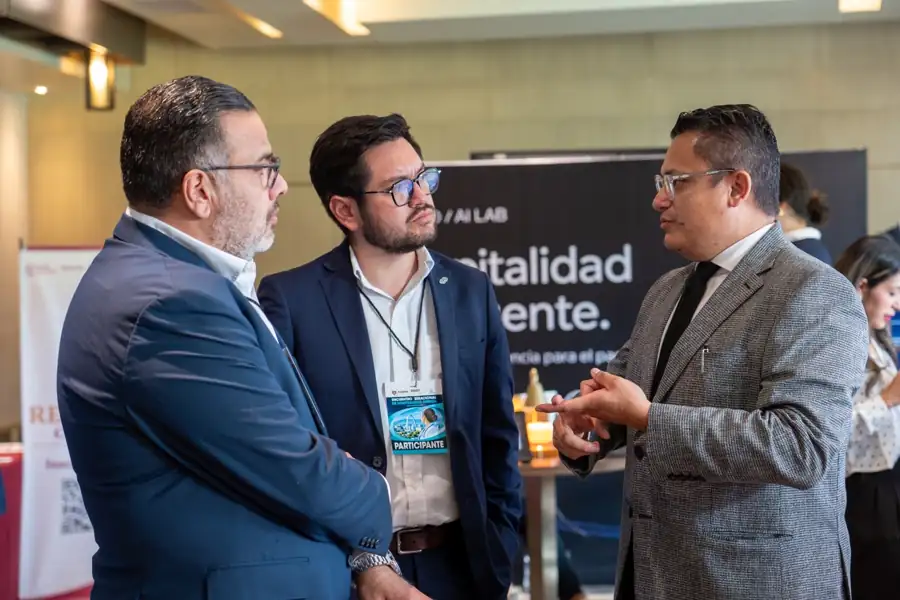
TIJUANA, Baja California — The Binational Medical Hospitality Summit (Encuentro Binacional de Hospitalidad Médica), organized and sponsored by Baja Health Cluster, took place Thursday, November 19, 2026, at the Grand Hotel Tijuana under the theme “One border, one shared language of health.” Hospital and clinic leaders met the leading international accreditors, Joint Commission International (JCI) and Global Healthcare Accreditation (GHA), to start their path to international accreditation and compete on quality, safety and trust. Medical tourism specialists and technology companies also took part. The underlying question was how Tijuana can move from being a medical destination to becoming an international health destination. One idea came up again and again across the panels: without verifiable quality and honest communication, there is no international trust.
From low prices to verifiable quality
The academic program featured keynote talks focused on quality and continuity of care. Dr. Ariel Ortiz Lagardere presented “The cheap is over”; Bill Cook spoke on “Beyond the procedure: designing an exceptional patient experience”; and Till Hartwig-Arce addressed “Trust and accountability in cross-border care.” The titles point to a strategic shift: stop competing on low prices and start competing on value and safety.
| Speaker / moderator | Role in the official program | Theme |
|---|---|---|
| Dr. Ariel Ortiz Lagardere | Keynote: The cheap is over | Competing on value |
| Bill Cook | Keynote: Beyond the procedure: designing an exceptional patient experience | Patient journey |
| Till Hartwig-Arce | Keynote: Trust and accountability in cross-border care | Binational care |
| Dr. Fabián Walters Arballo | Panel moderator: Tijuana facing the world: quality, trust and continuity | Accreditation and continuity |
| Eduardo Valles | Talk: Artificial intelligence applied to medical hospitality | Payments and follow-up |
| Hariank Famania | Talk: Emerging technologies in health tourism | Traceability and data |
Source: 2026 Academic Program, Binational Medical Hospitality Summit. Titles translated from Spanish.
The agenda also included six rounds of specialized workshops covering the path to JCI accreditation, international-quality facilities, hospital quality management, after-hours care, binational nursing and international standards in outpatient diagnostics, plus two hands-on labs: an accreditation simulation and smart hospitality design.
Leading the organization, moderation and institutional participation were Dr. Fabián Walters Arballo, president of Baja Health Cluster, and Dr. Jorge Alberto Arteaga Alemán, Health and Wellness Tourism coordinator at Baja California’s Ministry of Tourism, along with academic institutions and exhibitors in the pavilion and booths. (Arteaga Alemán explained the state’s accreditation strategy in an earlier interview with Tijuana Medical News.)
Payments and financing: removing friction for patients
Eduardo Valles, Mexico account manager at Heva, a payments and financing platform for international patients, described a common operational problem: collecting payment from, and following up with, patients who travel from another country. Many clinics, he said, handle contact messages, billing and medical records separately, which creates friction in care. “A standalone tool is not infrastructure,” he said.
Valles warned that competition is no longer just the clinic next door: if patients don’t get a quick reply, they may choose another doctor or another country. He said a local physician told him some patients are comparing options in Colombia. In his presentation he showed an AI agent that answers messages in several languages, a U.S.-dollar digital wallet and “buy now, pay later” financing available only to patients from the United States. According to Valles, the clinic receives full payment even when the patient pays in installments.
Because this is a private company’s commercial offer, it should be read as information, not endorsement. Before accepting any medical financing, patients should get clear figures on interest rates, fees and the total final cost of the procedure.
Technology with human judgment
Hariank Famania, a consultant in digital transformation and emerging technologies, opened with a caveat: “I’m not here to present you with an absolute truth.” He argued that artificial intelligence can take on repetitive administrative tasks but does not replace the physician, who keeps the clinical context, direct communication with the patient and the patient’s informed consent.
His central question was one of clinical governance: who moves the data of a patient treated on both sides of the border, with what authorization and under what controls. As a technical option he proposed traceability through blockchain (a shared digital ledger in which every change is recorded and cannot be altered unilaterally), along with stronger data-protection protocols. He named cybersecurity, medical certifications and hospital infrastructure as the sector’s structural challenges, and said all three are addressed by demonstrating trust.
Takeaways from the digital transformation panel
In the digital transformation panel, moderated by Hugo Salinas, former president of the Health Technology Cluster, both speakers agreed that technology only works as a tool supervised by people. Famania advised clinics to organize and standardize internal processes before automating them: “All automation does is multiply whatever you already have.” Valles said a frequent mistake is investing in digital advertising without a trained team or the administrative structure to answer incoming messages promptly.
On protecting personal and clinical data, Famania said medical records are among the most vulnerable to breaches, and that many institutions delay protecting them out of fear or lack of knowledge, even though basic safeguards cost less than people often assume.
Accreditation as the starting point
AUTHOR’S OPINION · LUIS ALBERTO PEREGRINO HERNANDES
As a public relations specialist in the medical sector, my reading of the day is clear: technology helps clinics respond and get paid more efficiently, but it does not replace what gives clinical care its meaning, which is verifiable quality. External, international evaluation raises safety standards without competing by cutting prices or relying on misleading advertising promises. I am talking about accreditation: the process in which an independent body audits and verifies whether an institution meets international protocols for quality and patient safety. For someone comparing options in two countries, with plenty of information but little certainty, that seal is a concrete reference point.
That is why I believe clinics and physicians in health tourism should have current health permits and formal accreditation processes from the start, and should communicate transparently what they offer, what clinical backing they have and what the total cost is. Ethics is not a marketing accessory; it is the condition for lasting trust. The same demand for rigor and transparency applies to those who accredit, promote and facilitate medical services in the region.
Where Tijuana is headed
The summit offered a snapshot of what Tijuana already is: a meeting point for patients, health professionals and technology solutions from both sides of the border. It also sketched a route toward what the city wants to become. Moving from medical destination to international health destination does not depend on any single player; it requires coordination among hospitals, accreditation bodies, health authorities and technology providers. A separate recent forum on trust and follow-up care in Tijuana medical tourism reached a similar conclusion.
The open question for the local sector is a practical one: how many institutions will be ready — with current accreditations, permits in order and honest communication — when the next international patient makes a first inquiry.
Source note: This article is based on the 2026 Academic Program of the Binational Medical Hospitality Summit (Baja Health Cluster); the recording and transcript of the talks by Eduardo Valles (Heva) and Hariank Famania and of the digital transformation panel; and the author’s direct observation at the event. Quotes are translated from Spanish. Product and service descriptions are the speakers’ own; Tijuana Medical News does not endorse them. This article is not medical or financial advice.