


Lee este artículo en español: El cruce de Otay movió casi 60 mil millones de dólares en 2025 y fortalece a Tijuana como polo logístico y de dispositivos médicos
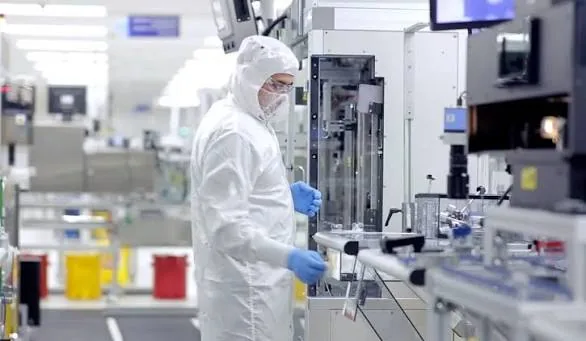
TIJUANA, Baja California — Tijuana’s Otay border crossing handled US$59.98 billion in trade in 2025, according to a Mexico Business News report published in late October 2026. The figure confirms the city’s role as one of the main gateways for North American manufacturing, including the medical device industry that has made Tijuana one of the largest producers of medical technology in the Americas.
A US$60 billion gateway
According to the report, the Otay crossing serves manufacturers in the automotive, electronics, aerospace and medical device sectors. Tijuana’s closeness to California, its cross-border road connections and a network of specialized logistics companies let manufacturers coordinate production in Mexico with distribution in the United States. The report places this trade growth alongside Baja California’s push to attract higher-value medical device work, not only assembly.
What the federal freight data shows
U.S. government figures point in the same direction. In its Transborder Freight Data Annual Report for 2025, the Bureau of Transportation Statistics (BTS) counts US$58.6 billion in truck freight through Otay Mesa, 9.1% of all U.S.–Mexico truck trade. That made it the third-busiest truck port on the border by value, behind two Texas crossings. (The Mexico Business News total is slightly higher because it is not limited to trucks.)
| U.S.–Mexico truck port | Trade value, 2025 | Share of truck trade | Change vs. 2024 |
|---|---|---|---|
| Laredo, Texas | US$296.2 billion | 46.1% | +5.1% |
| El Paso (Ysleta), Texas | US$112.4 billion | 17.5% | +34.8% |
| Otay Mesa, California (Tijuana) | US$58.6 billion | 9.1% | −3.8% |
| Hidalgo, Texas | US$40.8 billion | 6.3% | −4.3% |
| Santa Teresa, New Mexico | US$33.0 billion | 5.1% | −14.9% |
Source: U.S. Bureau of Transportation Statistics, Transborder Freight Data Annual Report 2025.
Otay’s truck freight value dipped 3.8% from 2024, even as total U.S.–Mexico freight rose 3.9% to about US$872.8 billion. Separate BTS border crossing data show 990,111 trucks entered the United States from Mexico at Otay Mesa in 2025, down 6.6% from the year before but still 13% of all trucks crossing from Mexico.
Why it matters for medical devices
Medical technology is a large part of what crosses at Otay. In the BTS data, the commodity group that covers medical and surgical instruments, together with optical and measuring equipment, was the fourth-largest category of U.S.–Mexico truck trade in 2025, worth about US$31.8 billion. Seventy percent of that value moved from Mexico into the United States.
Local industry groups want more of that value to be designed in Tijuana, not just built here. The Baja California Medical Device Cluster is planning a medical device innovation center in Tijuana to add design, engineering and research to the region’s manufacturing base. A new alliance of Tijuana business and health organizations is also working to link device makers with the city’s hospitals and clinics. For background on the size of the binational industry, see our guide to the Cali Baja biomedical corridor.
South San Diego’s warehouse boom
Just north of the line, Otay Mesa has become San Diego County’s main frontier for warehouses and distribution centers. It is one of the last parts of the county with large tracts of open industrial land, while older hubs such as Kearny Mesa and Miramar are largely built out, as NBC San Diego has reported. According to commercial real estate firm Kidder Mathews, Otay Mesa now holds about 27.3 million square feet of industrial space, roughly one-seventh of the county’s total of 195 million.
Large projects keep arriving:
- Amazon completed a 1.1 million-square-foot build-to-suit facility at 6980 Otay Mesa Road, the largest delivery in San Diego County in the second quarter of 2026, according to Savills.
- Otay Business Park, a 119-acre campus along the border near the planned new port of entry, finished its first phase of four warehouses totaling 612,240 square feet. The San Diego Business Journal put the first phase’s cost at US$225 million.
- Logistics firms are staying put. Freight forwarder Expeditors renewed nearly 99,000 square feet in Otay Mesa in September 2026, and 3PL Winner renewed about 90,000 square feet in August, Kidder Mathews reports.
Demand is absorbing much of this new space. In the first nine months of 2026, Otay Mesa added a net 873,721 square feet of occupied industrial space, more than the net gain for the whole county (776,480 square feet), which means other parts of the county lost tenants overall. The building wave has also pushed vacancy up: Otay Mesa’s direct vacancy rate was 14.2% in the third quarter, compared with 6.5% countywide, and average asking rents were US$0.99 per square foot per month, versus US$1.47 for the county. Kidder Mathews describes the market as stabilizing gradually rather than rebounding. For manufacturers and shippers, the lower rents mean more choice of modern space right next to the border.
What it means for San Diego and California
For many of Tijuana’s factories, including medical device plants, South San Diego works as the U.S. half of the supply chain. Products cross at Otay and are then stored, cleared by customs brokers and shipped out from warehouses a few miles from the border. That makes the cross-border economy a source of jobs on both sides:
- U.S.–Mexico trade supports more than 566,000 jobs in California, and more than 90% of California–Mexico trade moves by truck, according to the San Diego Association of Governments (SANDAG).
- A World Trade Center San Diego report found that trade with Mexico supports about 95,000 jobs in San Diego and Imperial counties, Times of San Diego reported in November 2025. The report warned of risks from U.S. policy shifts, global trade uncertainty and gaps in infrastructure.
- University of San Diego economist Alan Gin has said that biotech companies, medical device manufacturers, the port, and warehouse and shipping companies all depend on the roughly US$80 billion in goods that cross the region’s border each year, Voice of San Diego reported.
The biggest bet on that future is the Otay Mesa East Port of Entry, a US$1.3 billion crossing being built about two miles east of the current one. Officials have targeted a phased opening in late 2027, according to SANDAG and Mexico Business News, although the project has been delayed several times and a firm opening date has not been confirmed. When the project was announced, the California State Transportation Agency projected it would cut peak wait times at nearby crossings in half and add about US$1.8 billion a year to the economy. Many of the new Otay Mesa warehouses, including Otay Business Park, were built close to the new port in anticipation of that traffic.
What to watch
Freight through Otay is closely tied to factory output in Tijuana, so the next BTS monthly releases will show whether the 2025 dip continues. Warehouse vacancy in Otay Mesa is the other signal to follow: if the new buildings fill, it will show that more of Tijuana’s production is being handled on the San Diego side. Faster, more predictable crossings matter for medical device makers, whose sterile products and regulated supply chains depend on on-time delivery.
Source note: This article summarizes reporting by Mexico Business News and public data from the U.S. Bureau of Transportation Statistics, plus commercial real estate reports (Kidder Mathews, Savills), SANDAG and regional news coverage. Figures are those reported by the sources, which are linked above.