



Lee este artículo en español: Pablo Valencia, de Go Fillers Tijuana: el turismo médico crece más rápido que la infraestructura de la ciudad
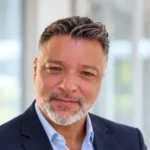
TIJUANA, Baja California — Medical tourism in Tijuana could double over the next five years, and the city needs to prepare for it, says Pablo Valencia, administrator of Go Fillers Tijuana, an aesthetic medicine clinic in the city.
In an interview with Tijuana Medical News, Valencia described how a family visit roughly a decade ago turned into a career coordinating care for patients from the United States and beyond, and how the industry has changed in that time.
From a family visit to a new career
Valencia lived in Southern California for more than 20 years and worked in sales in California and Texas. Around 2014 or 2015, he came to Tijuana to help a relative who was ill. Through that relative, he met a physician who had once been the family’s doctor and had since specialized in aesthetic medicine and opened a hospital.
The two became friends, and the doctor asked whether he would like to help coordinate procedures. A back injury that kept Valencia away from his job gave him more time to spend in Tijuana, where he learned the work from the hospital floor.
What surprised him most, he said, was that most of the doctors, anesthesiologists and specialists he met spoke English. “I realized people were really making an effort to give excellent service so that foreigners would come here for treatment,” he said.
Doing it the professional way
At the time, Valencia said, many patients reached Tijuana through brokers or agencies that dropped them off and lost interest once they were paid. He decided to take a different approach.
“You have to take care of people and look after them so they keep coming back and tell their families,” he said. “It’s not something you do once, like selling a pair of shoes.” That meant explaining everything clearly in the patient’s own language, which required him to learn medical vocabulary he had never needed in sales.
After eight to nine years on an earlier project with other partners, Valencia launched Go Fillers Tijuana with Dr. Irene Ramos. The clinic is approaching its third year. Among the services patients value most, he said, is free transportation between the Mexican side of the San Ysidro port of entry and the clinic, about 3 kilometers away. Many patients, especially older ones, are not comfortable finding their way around an unfamiliar city, even over a short distance.
Some arrive expecting run-down facilities because of what they have heard about Mexico. “They get here and realize these places are nicer than where they get care back home,” he said. “I’m not talking about luxury. They have all the requirements.”
Many of those first patients still return. Valencia recalled attending one patient’s 48th birthday party in California when he was just starting out. She recently invited him to her 60th, and he said she looks as well as or better than when they met, in part because she now manages her diabetes more closely.
How the industry has changed
When Valencia started, he could leave his car in California and walk across the border without much of a wait. The growing traffic since then, he said, reflects the rising number of people crossing for medical and aesthetic care, a wave he dates to around 2018.
Before GLP-1 medications were widely used for weight loss, he recalled, many patients came for bariatric surgery. He estimated that the city had 50 to 60 certified plastic surgeons when he arrived and has several hundred today, as specialists from across Mexico move to what he called the cradle of plastic surgery in the country.
He described a similar shift in dentistry, from low-cost offices downtown to modern clinics with advanced technology serving patients from the U.S. and Canada. Much of the Zona Río, parts of downtown and Colonia Cacho are now filled with medical buildings, clinics and laboratories. Near Plaza Río, the first thing many visitors see after crossing, it is common to see crowds of nurses and medical staff in uniform.
Valencia also pointed to the growth of U.S. companies that finance procedures performed in Mexico, a sign, he said, of how much demand there is.
More medical than aesthetic
Although Tijuana is known for cosmetic surgery, Valencia estimated that more than half of the patients who come to the city are seeking medical rather than aesthetic care: orthopedic problems, allergies, poorly controlled diabetes and other conditions that they have not been able to resolve at home.
Medication is another draw. Valencia, who has diabetes himself, said some diabetes medications are less expensive in Mexico, at times costing little more than a patient’s U.S. insurance copay.
At Go Fillers Tijuana, he said, patients who come for aesthetic treatments sometimes have untreated health problems. In those cases, Dr. Irene Ramos advises them to address their medical condition first. “Sometimes the results we expect from an aesthetic treatment aren’t optimal because of their health problems,” he said, adding that patients often blame the doctor when the cause is their health.
Who the patients are
Among Latino patients, Valencia estimated that about 40% speak little Spanish and are often second- or third-generation Americans, about 20% prefer to be served entirely in Spanish, and the remaining 40% are bilingual. For that reason, the clinic produces its advertising mainly in English.
The clinic also sees patients from Russia, Ukraine, the Middle East, Europe and Canada. The most notable recent trend, he said, is the rise in Asian patients over the past two to three years. Filipino patients have long been part of the mix, but the clinic now also sees Vietnamese, Chinese, Japanese and Korean patients. By his estimate, they now make up about a quarter of the clinic’s patients.
Valencia also described a type of American patient who is better informed about Mexico and less swayed by negative headlines. These patients, he said, tend to come for larger treatments that their U.S. insurance does not cover.
Proximity as a safety advantage
Valencia sees Tijuana’s location as one of its strongest arguments. He gave the example of hair transplants, a fast-growing service in the city that often uses Turkish techniques, with several Turkish companies opening operations in Tijuana. Patients sometimes compare prices with clinics in Turkey, he said, but a round-trip flight there can cost about as much as the procedure in Tijuana.
More importantly, he said, is what happens if something goes wrong. “No one ever expects a complication,” he said, “but we’re five minutes from the border.” A patient from Los Angeles who feels unwell can return for a check-up quickly. A patient 12 hours away by plane may end up in a U.S. emergency room that does not treat aesthetic complications.
He added that many patients also come for vision care, including LASIK and cataract surgery, which he said can cost a fraction of U.S. prices when insurance does not approve the procedure.
“Growing faster than the infrastructure”
Looking ahead, Valencia expects medical tourism in Tijuana to grow 80% to 100% over the next five years. His concern is whether the city can keep up.
He pointed to the need for more border crossings, solutions to traffic, and room for the hundreds of drivers who wait to pick up patients near the border. Hotels are opening and the government is building new roads, he said, but “medical tourism is growing faster than Tijuana’s infrastructure.”
Getting here has already changed. Vans packed with a dozen patients from the airport have largely given way to Uber, private transport services and the San Diego Trolley, with many patients simply walking across.
Advice for new clinics
For clinics entering the market, Valencia’s advice is to prepare for more patients and keep learning. Trends now move so quickly, he said, that something new arrives before the last one is fully developed, often driven by social media posts that patients misinterpret. Clinics, he said, should respond by giving the best possible service.
He also sees mental health as an underdeveloped market in Tijuana. Patients who come for one treatment often ask for referrals for something else entirely: a gynecologist, a psychiatrist for a stressed daughter, an allergist, a proctologist or a dentist.
“Everyone comes to Tijuana looking for solutions,” he said. “Tijuana is prepared, and it’s preparing every day, to receive these people and care for them as they deserve.”
Source note: This article is based on an interview conducted in Spanish and translated by Tijuana Medical News. Percentages, counts and growth projections are Pablo Valencia’s own estimates and were not independently verified. His comments on health and medications reflect his personal experience and are not medical advice; talk with a licensed physician before any treatment.